You know that specific “crunch” sound your car makes when you hit a pothole you didn’t see coming? If you drive anywhere in Delaware—whether it’s navigating the perpetual construction zones on I-95 near Wilmington or dodging patches on the back roads of Sussex County—you know exactly what I’m talking about.
It’s frustrating. But more than that, it’s expensive.
We live in a unique state. We’ve got the heavy industrial traffic pounding the pavement in New Castle County, and down south, we deal with coastal flooding and sandy soil shifting under Route 1. Throw in the humid summers and the freeze-thaw cycles of a Mid-Atlantic winter, and it feels like our roads are fighting a losing battle.
Honestly, it sometimes feels like as soon as the orange cones come down, the cracks start appearing again.
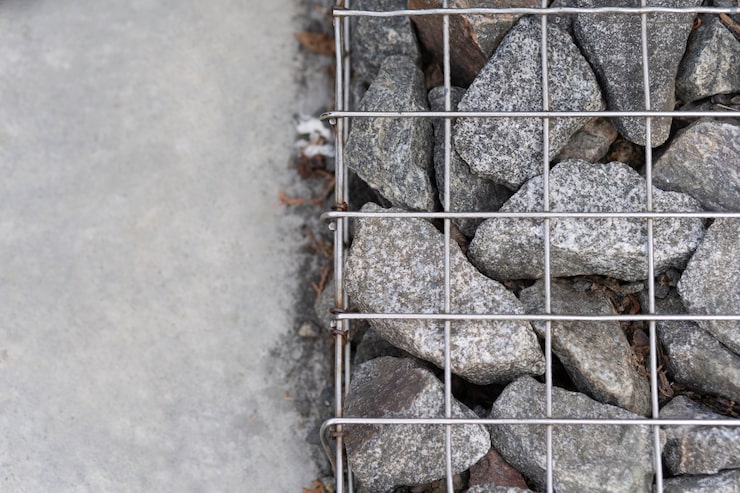
Before we talk about the solution, let’s get real about the problem. Standard concrete is porous. It has billions of tiny microscopic holes.
In Delaware, we use a lot of road salt. When snow melts, that salty water seeps into those tiny pores. Then night falls, the temperature drops below freezing, and that water expands. It pushes the concrete apart from the inside out. Over a few winters, that internal pressure turns into surface spalling and deep cracks.
And if you’re near the coast—say, Lewes or Rehoboth—that salt air is doing the same thing to the steel rebar inside the concrete, rusting it out before the road has even hit its half-life.
This is where graphene changes the game.
By integrating graphene into the mix, we are essentially changing the molecular structure of the concrete. We aren’t just adding a layer on top; we are making the material itself denser and more impermeable. If water can’t get in, it can’t freeze and break the road. It’s that simple.
So, what does this actually look like on the ground?
Imagine paving a stretch of road in Dover and not having to budget for major repairs for decades. Think about the savings on labor, materials, and traffic control if you can extend the service life of a highway by 40% or 50%.
Because graphene increases tensile strength, we can sometimes design thinner slabs that still handle the same heavy load weights from freight trucks. Less concrete means lower material costs and a smaller carbon footprint. It’s a win-win.
I think it helps to see this side-by-side. Here is how a standard Class A concrete mix stacks up against a graphene-enhanced mix in our specific climate conditions.
| Feature | Traditional Concrete Roadway | Graphene-Enhanced Roadway |
| Water Permeability | Moderate (Allows water ingress) | Very Low (Hydrophobic properties) |
| Freeze-Thaw Resistance | Prone to cracking after repeated cycles | Superior (Resists internal expansion) |
| Tensile Strength | Low (Relies heavily on rebar) | High (Increased flexural strength) |
| Curing Time | Standard (28 days to full cure) | Accelerated (Faster strength gain) |
| Abrasion Resistance | Wears down under heavy traffic | Enhanced (Resists surface wear) |
| Salt Corrosion | High risk for internal rebar | Protected (Denser matrix blocks chlorides) |
Smart Applications of Graphene Concrete
At The Graphene Solution, we believe that innovation begins with material science. Our graphene-infused concrete is leading the way in sustainable, high-performance infrastructure across various sectors. This powerful technology doesn’t just strengthen construction — it redefines what’s possible in terms of longevity, safety, and efficiency. Below, discover the ten most impactful uses of graphene concrete across industries that demand excellence.

Graphene-enhanced concrete provides the superior compressive strength needed for tall, modern skyscrapers. Its lightweight properties and structural stability reduce the load on foundations while enhancing safety in seismic zones.
In critical infrastructure like bridges, graphene adds durability and crack resistance. It ensures longer lifespans with reduced maintenance, even under heavy loads and extreme weather conditions.
Graphene concrete helps roads last longer by resisting cracking and surface wear. It's ideal for busy highways where traffic and climate changes typically cause rapid deterioration.
From piers to seawalls, graphene protects concrete from saltwater corrosion. It significantly improves the longevity of marine structures by resisting moisture and harsh coastal conditions.
Graphene-infused concrete ensures leak-proof construction in water retention systems. Its impermeability and high strength make it perfect for dams, spillways, and reservoirs.
Safety is non-negotiable in nuclear and energy projects. Graphene-enhanced concrete offers unmatched fire resistance and structural integrity, critical for power stations and reactor containment.
Underground environments demand resilient materials. Graphene concrete excels in tunnel construction, offering faster curing times, high load resistance, and long-term durability.
For everyday construction, graphene offers eco-friendly, cost-effective solutions. It’s ideal for foundations, walls, and slabs in both commercial and residential settings, reducing material waste and emissions.
Warehouses, factories, and heavy-duty plants benefit from graphene’s load-bearing strength and resistance to chemicals. It ensures longer-lasting floors and structural components in demanding industrial zones.
From runways to terminals, graphene concrete supports aviation’s demanding needs. Its toughness under high traffic and weather fluctuations makes it a go-to for modern airport development.
I know that trying a “new” material can feel risky. In the construction world, we tend to stick with what we know because nobody wants to be responsible for a failed pour. I get that.
But graphene isn’t an experiment anymore. It’s a proven technology that is being adopted globally because the math just works.
We treat every project as a partnership. We aren’t just shipping you a tote of product and wishing you luck. We work with your engineers to dial in the mix design. We coordinate with the batch plant to ensure the dosing is precise. We are there to answer questions when the trucks arrive.
We understand the local context. We know that pouring in the humid heat of a July day in Middletown is different than pouring in November. We factor that in.
Our goal is to give you a roadway that you can essentially forget about. The best infrastructure is the kind you don’t notice because it just works.
If you are curious about the broader impact of this technology on things like bridges or overpasses, take a look at our insights on graphene concrete roadway and highway construction benefits.
Look, we have a choice. We can keep patching the same potholes on Route 13 and complaining about the traffic, or we can start building with materials that actually handle the Delaware environment.
Graphene concrete isn’t just about making stronger roads; it’s about respecting the taxpayer dollar and the driver’s patience. It’s about building infrastructure that survives the salt, the freeze, and the freight.
If you have a project coming up—whether it’s a municipal highway, a residential subdivision, or a commercial access road—let’s talk. I’d love to look at your specs and show you exactly what this technology can do for your durability and your bottom line.
Ready to stop the repair cycle?Contact us for services today and let’s schedule a consultation to future-proof your next paving project.
As Delaware modernizes its transportation and marine systems, graphene concrete is emerging as a key solution for sustainable, high-performance construction. Its nanostructured reinforcement minimizes porosity, strengthens internal bonding, and delivers resistance against corrosion and chemical intrusion. These properties make it particularly effective in Delaware’s humid and salt-rich environments. The Graphene Solution provides engineers and contractors with materials optimized for these regional challenges, ensuring durability and efficiency across all applications. Because graphene concrete is still an emerging innovation, many professionals have questions about cost, integration, and technical performance. Below, The Graphene Solution addresses the most common inquiries from Delaware builders seeking to understand how graphene technology enhances both sustainability and long-term structural reliability.


UPDATES AND NEWSStay informed with expert insights, industry news, and project breakthroughs from The Graphene Solution. Our blog covers everything from graphene applications in construction to sustainable building trends and performance tips—designed to help you build smarter.