You know the feeling.
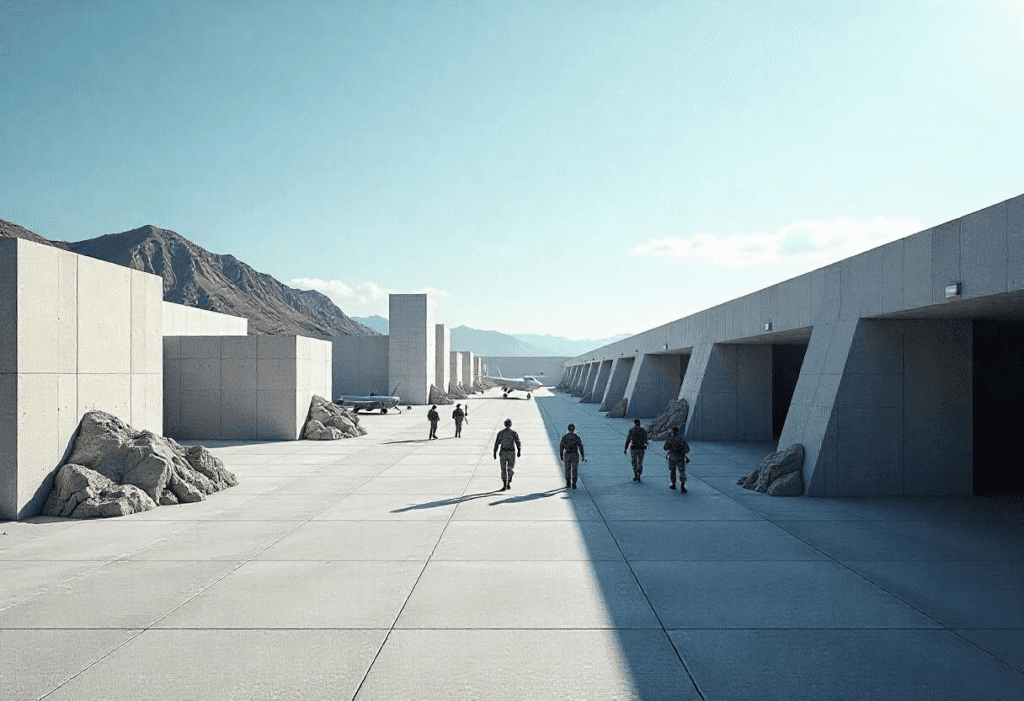
It’s that sinking sensation when you get the structural assessment report for a key airfield or a coastal bunker. You’re scanning the pages, and it’s the same old story: spalling, saltwater intrusion, micro-fractures in the blast walls.
If you manage defense infrastructure, you know that “readiness” isn’t just about training troops or fueling jets. It’s about the ground they stand on. Literally.
I’ve spoken with base commanders who lose sleep over this. They worry that their critical assets—runways, ammo depots, command centers—are aging faster than they can be repaired. They worry that in a real conflict, the “standard spec” concrete just won’t hold up to modern ballistics or the sheer weight of rapid mobilization.
And let’s be honest, the “patch and pray” method? It’s a liability we can’t afford anymore.
We are fighting 21st-century threats with Roman-era building materials. Standard concrete is brittle. It drinks water. It cracks under thermal shock.
But what if your infrastructure could fight back? What if the concrete itself was engineered to be stronger, denser, and more resilient than anything we’ve built with before?
That is where graphene enters the conversation. We aren’t just talking about a new additive; we’re talking about hardening the very foundation of national defense.

Let’s look at the reality of modern military logistics.
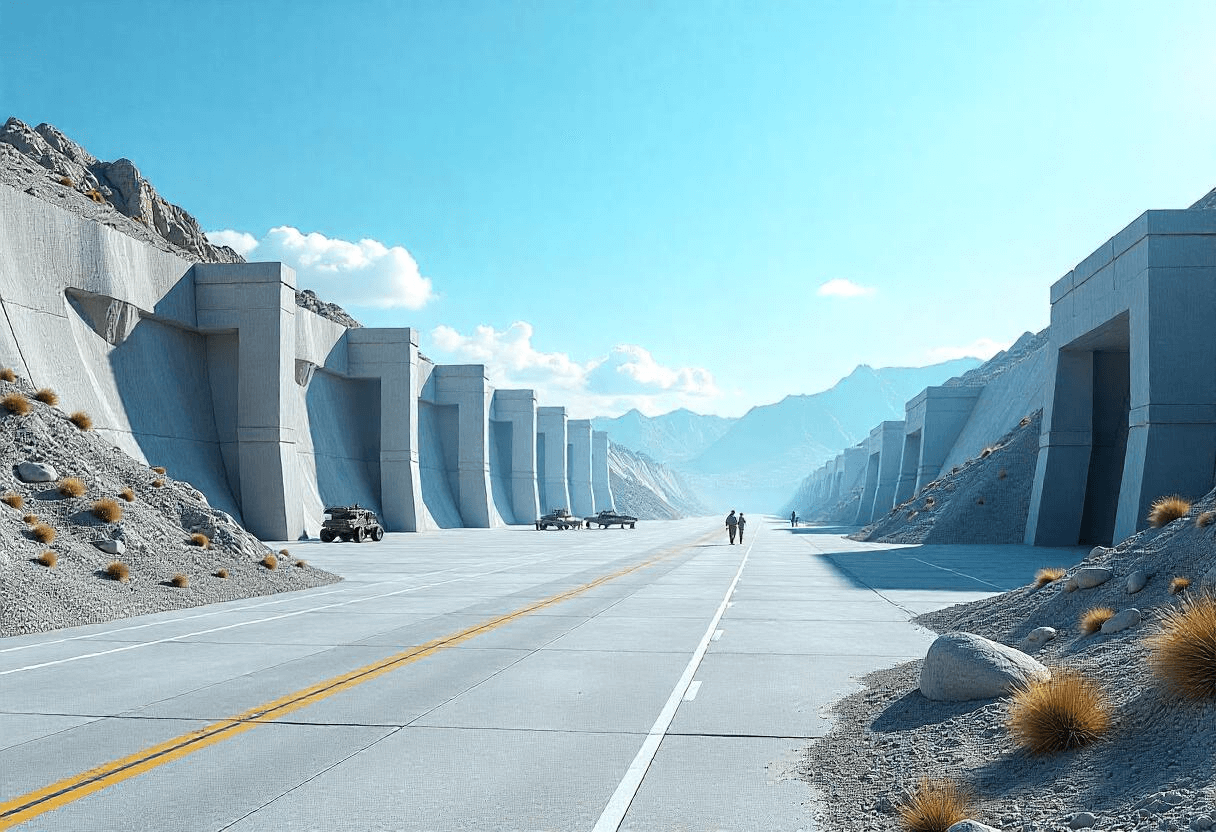
The equipment is heavier. A fully loaded C-17 Globemaster punishes a runway in ways 1950s engineering didn’t account for. The environments are harsher. Whether it’s a forward operating base (FOB) in a desert with extreme temperature swings or a naval pier constantly chewed on by salt spray, standard concrete is under siege.
When we ignore the limitations of traditional materials, the cost is high. And I’m not just talking about the budget.
The Cost of Downtime If a runway needs to be resurfaced, that airfield is down. In a strategic theater, downtime is a vulnerability. You can’t tell an adversary to wait two weeks for the concrete to cure.
The Logistics Tail Hauling cement to remote locations is a nightmare. It’s heavy, it’s bulky, and it makes your supply convoys slow targets. If you could build stronger structures using less material, you shrink that logistics tail.
We have to stop accepting degradation as an inevitable fact of life. We need materials that protect the force, not materials that require the force to protect them through constant maintenance.
So, what is the solution here? It’s not magic. It’s nanotechnology applied to civil engineering.
We take standard concrete mixes and integrate graphene—a material consisting of a single layer of carbon atoms arranged in a honeycomb lattice. It is 200 times stronger than steel.
But we don’t just dump it in the mixer and hope for the best. We engineer the mix so that the graphene acts as a nucleation point. It changes how the cement hydrates at a molecular level. It locks the structure together into a denser, tighter matrix.
I know what you’re thinking: “Does this require a team of scientists on-site?”
No. Simplicity is key to military application.
Threat Assessment: We look at the specific requirements. Is this a blast wall? A runway? A deep-sea pier? The mix is adjusted for the threat.
The Mix Design: We formulate the graphene admixture to work with the local aggregates available near your site.
Deployment: The admixture is added at the batch plant. It disperses evenly.
The Pour: Your existing engineering corps or contractors pour it just like standard concrete. It pumps the same. It finishes the same.
The Result: A structure that cures faster and reaches strength milestones in days, not weeks.
This isn’t just about making things “harder.” It’s about making them smarter.
Houston, Tx 77066


Let’s get specific about how this changes the game on the ground.
I remember looking at data from a test on blast resistance. Standard concrete tends to shatter. It turns into shrapnel—which, as you know, can be just as deadly as the incoming fire.
Graphene-enhanced concrete behaves differently. Because it has significantly higher tensile strength (flexibility), it absorbs more energy. It tends to hold together. It turns a catastrophic breach into a manageable fracture.
Here is what this technology brings to the table for Military Defense Infrastructure:
Rapid Runway Repair (RRR): Graphene accelerates the early strength gain of concrete. We can get a runway operational for heavy transport aircraft much faster than with traditional mixes. For airport runway and infrastructure projects, this speed is a tactical advantage.
Impermeability & Stealth: A denser concrete blocks moisture. This is crucial for underground bunkers where water intrusion can ruin sensitive electronics. There’s also research suggesting denser carbon-based structures can have interesting properties regarding signal attenuation.
Corrosion Resistance: For naval assets, this is the holy grail. Graphene blocks the chloride ions in saltwater from penetrating the concrete and rusting the rebar. It extends the life of piers and drydocks by decades.
Reduced Material Footprint: Because the concrete is stronger, you can often design thinner slabs or walls to achieve the same protection rating. This means less cement to transport, which is a massive win for logistics in remote areas.
Smart Applications of Graphene Concrete

At The Graphene Solution, we believe that innovation begins with material science. Our graphene-infused concrete is leading the way in sustainable, high-performance infrastructure across various sectors. This powerful technology doesn’t just strengthen construction — it redefines what’s possible in terms of longevity, safety, and efficiency. Below, discover the ten most impactful uses of graphene concrete across industries that demand excellence.
Graphene-enhanced concrete provides the superior compressive strength needed for tall, modern skyscrapers. Its lightweight properties and structural stability reduce the load on foundations while enhancing safety in seismic zones.
In critical infrastructure like bridges, graphene adds durability and crack resistance. It ensures longer lifespans with reduced maintenance, even under heavy loads and extreme weather conditions.
Graphene concrete helps roads last longer by resisting cracking and surface wear. It's ideal for busy highways where traffic and climate changes typically cause rapid deterioration.
From piers to seawalls, graphene protects concrete from saltwater corrosion. It significantly improves the longevity of marine structures by resisting moisture and harsh coastal conditions.
Graphene-infused concrete ensures leak-proof construction in water retention systems. Its impermeability and high strength make it perfect for dams, spillways, and reservoirs.
Safety is non-negotiable in nuclear and energy projects. Graphene-enhanced concrete offers unmatched fire resistance and structural integrity, critical for power stations and reactor containment.
Underground environments demand resilient materials. Graphene concrete excels in tunnel construction, offering faster curing times, high load resistance, and long-term durability.
For everyday construction, graphene offers eco-friendly, cost-effective solutions. It’s ideal for foundations, walls, and slabs in both commercial and residential settings, reducing material waste and emissions.
Warehouses, factories, and heavy-duty plants benefit from graphene’s load-bearing strength and resistance to chemicals. It ensures longer-lasting floors and structural components in demanding industrial zones.
From runways to terminals, graphene concrete supports aviation’s demanding needs. Its toughness under high traffic and weather fluctuations makes it a go-to for modern airport development.


UPDATES AND NEWSStay informed with expert insights, industry news, and project breakthroughs from The Graphene Solution. Our blog covers everything from graphene applications in construction to sustainable building trends and performance tips—designed to help you build smarter.
military concrete, graphene military applications, graphene defense