Graphene Concrete for Industrial Flooring

  • Home
  • Graphene Concrete for Industrial Flooring

Graphene Concrete for Industrial Flooring

You know that sound.

It’s the jarring thud-clunk of a loaded forklift hitting a spalled expansion joint. It echoes through the warehouse. The driver winces, the load rattles on the pallet, and you—standing in the office overlooking the floor—feel your blood pressure spike just a little bit.

It’s not just a noise. It’s the sound of your infrastructure failing you.

If you manage a manufacturing plant, a distribution center, or a heavy-duty workshop, you know that the floor isn’t just a surface you walk on. It is the literal platform for your entire operation. And honestly, it’s usually the most abused asset in the building.

We treat industrial floors like they’re invincible. We drive 10,000-pound machinery over them 24/7. We drop heavy steel parts on them. We spill oils, solvents, and chemicals on them. And then, when cracks appear or the surface starts to “dust” and cover your inventory in a fine white powder, we get frustrated.

We usually resort to the “patch and pray” method. You shut down an aisle, bring in a crew to fill the crack with epoxy or standard mortar, wait for it to dry, and hope it holds.

But six months later? You’re hearing that thud-clunk again.

It’s an exhausting cycle. But here’s the thing: the problem usually isn’t your maintenance crew. The problem is the material itself. Standard concrete has served us well for a century, but in modern, high-stress industrial environments, it has hit its ceiling.

It’s time to upgrade the mix. That’s where Graphene Concrete for Industrial Flooring comes in.

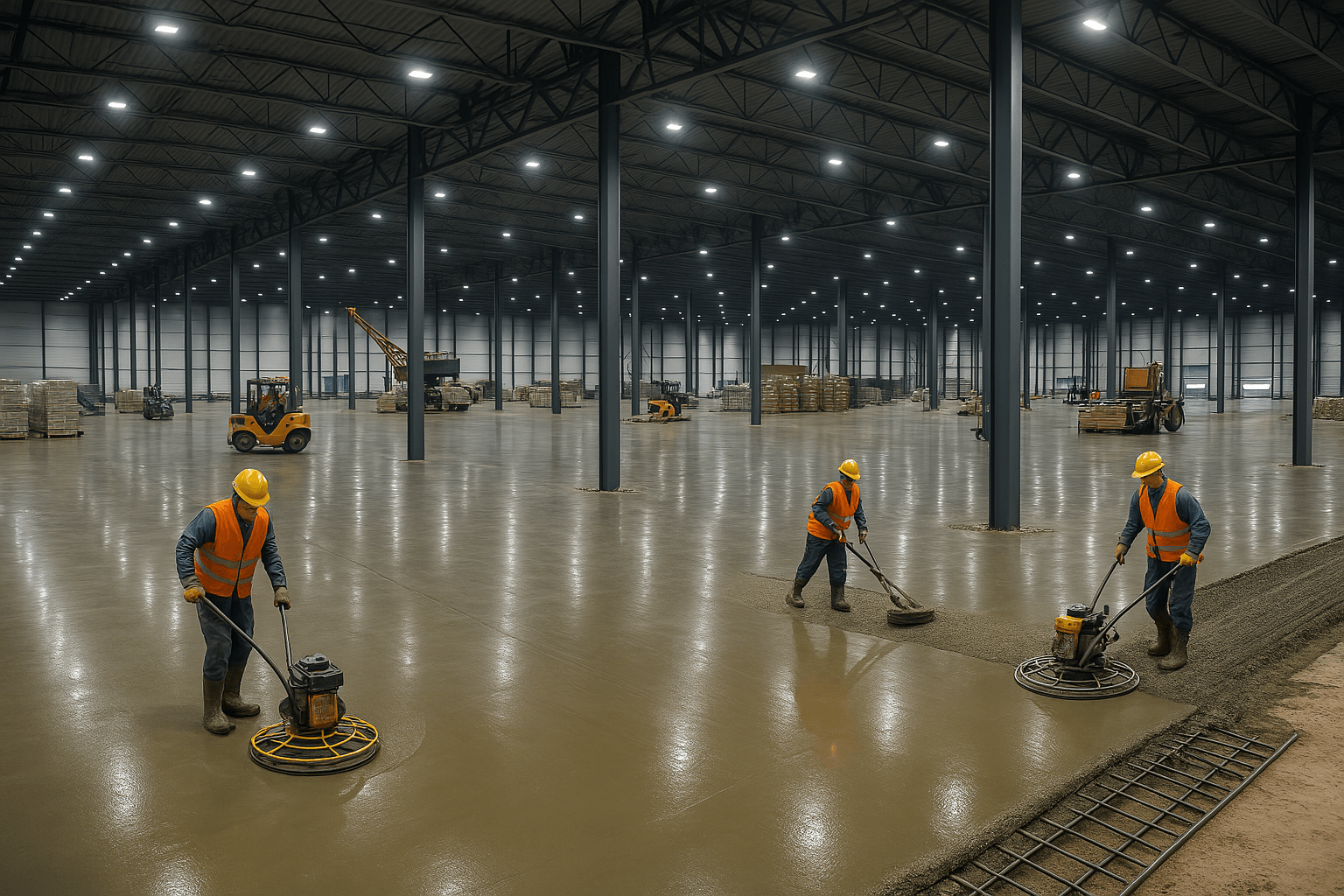
Workers applying graphene-enhanced concrete in a large industrial warehouse, showcasing durable flooring installation under bright overhead lights, with heavy machinery in the background.

Why "Standard" Concrete is Costing You Money

Let’s be real about the hidden costs of a failing floor.

When I talk to facility managers, they often look at floor repairs as a necessary evil. A line item on the maintenance budget. But if you really dig into the numbers, the cost of “good enough” concrete is staggering.

Think about the Dusting. You know that fine white grit that settles on your bottom shelves? That’s not dust coming in from outside. That is your floor slowly disintegrating under the abrasion of tires and foot traffic. In food processing or precision manufacturing, that dust is a contamination risk. In a general warehouse, it’s a cleaning nightmare that ruins packaging.

Think about the Equipment Wear. Rough floors destroy forklift tires. They wreck suspension systems and wreak havoc on sensitive onboard electronics. I’ve seen fleets where the maintenance costs dropped by 30% just by fixing the floor profile.

Think about the Downtime. This is the big one. What does it cost you to shut down a loading dock for three days to re-pour a slab? What happens to your throughput?

When you stick with traditional concrete, you are signing up for these issues on repeat. You’re fighting physics with a material that is naturally porous and brittle.

But what if we changed the physics?

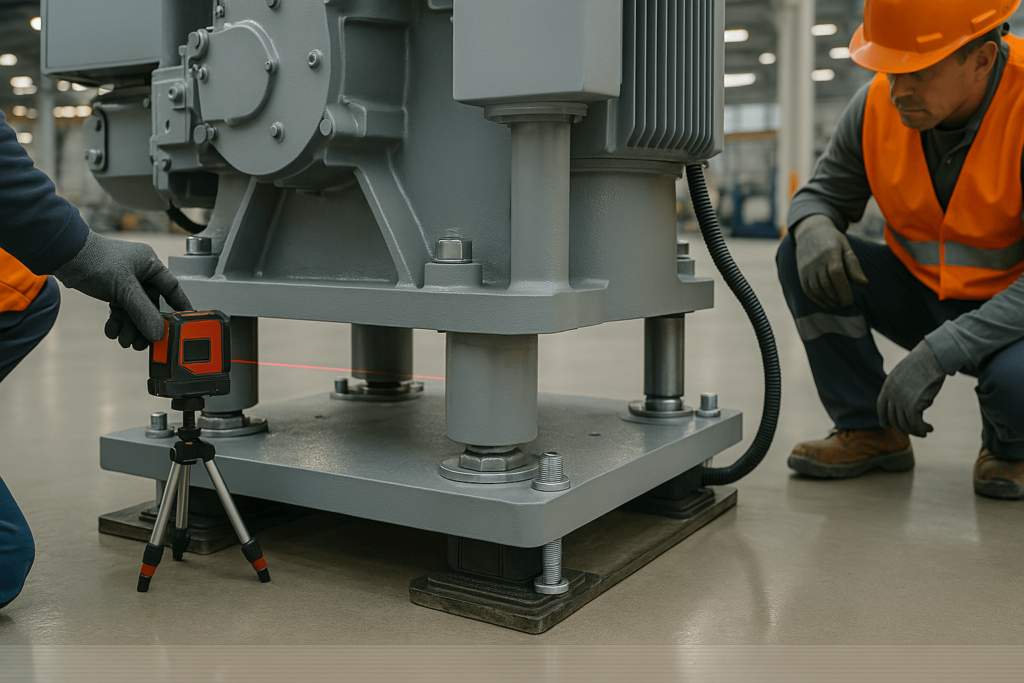
Workers measuring equipment alignment in an industrial facility using a laser level, emphasizing precision and durability in construction.
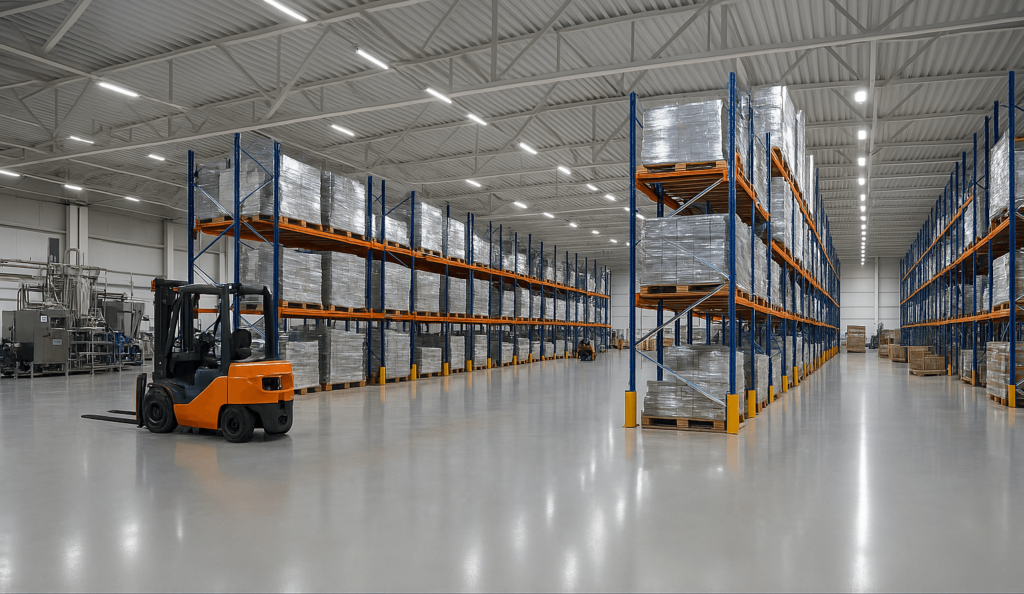
Warehouse interior with high shelves stacked with materials, orange forklift in foreground, showcasing durable flooring suitable for industrial applications and optimized for graphene-enhanced concrete.

The Benefits You Can Actually Feel

So, what does this actually look like six months or six years down the road?

When you switch to graphene-enhanced concrete for your industrial facilities and warehouse construction, you stop noticing the floor. And in your line of work, that is the highest compliment a floor can get.

Here are the specific performance shifts we see:

  • Extreme Abrasion Resistance: The surface hardness shoots up. That means no more dusting. The floor stays polished and clean, even under heavy tire traffic.

  • Higher Tensile Strength: Concrete is great at handling compression (weight pushing down), but terrible at tension (being pulled apart). Graphene significantly boosts tensile strength. This means fewer cracks when a heavy load causes the slab to flex slightly.

  • Impermeability: Because the structure is so dense, fluids don’t soak in. Oil spills sit on top. Chemical splashes don’t eat into the matrix as quickly. It makes cleanup incredibly easy.

  • Reduced Joint Issues: Graphene helps manage the heat of hydration during curing. This leads to less shrinkage, which means your expansion joints don’t open up as wide, and you get fewer random “shrinkage cracks” across the slab.

❓ Frequently Asked Questions About Graphene Industrial Flooring

Industrial developers and engineers often ask how graphene can make a measurable difference in their facility’s performance and cost savings. Here are some common questions answered with clarity and detail.

Absolutley. Once the graphene is mixed into the concrete wet, it is locked into the structure forever. It is inert. There is no risk of it becoming airborne later. It’s safe for your workers and your products.

Yes! In fact, this is one of our most popular services. If you have a damaged slab but don't want to rip the whole thing out, we can often pour a bonded overlay using graphene concrete. Because it bonds so well and is so strong, we can pour it thinner than a standard overlay, saving you headroom.

The material cost per yard is higher than standard concrete, yes. But you have to zoom out. You might be able to pour a thinner slab (saving material volume) because of the increased strength. You definitely save on labor by not having to apply topical hardeners. And when you factor in not having to repair it every two years, the ROI is usually positive within the first 24 months.

While every mix is different, we often see graphene concrete reaching structural competence (the point where you can drive on it) days earlier than standard mixes. In a 24/7 facility, buying back those 3 or 4 days is worth its weight in gold.
Graphene Solution logo featuring a molecular structure symbolizing innovative graphene-enhanced concrete technology.Smart Applications of Graphene Concrete

Breakthrough Uses of Graphene in Modern Construction

At The Graphene Solution, we believe that innovation begins with material science. Our graphene-infused concrete is leading the way in sustainable, high-performance infrastructure across various sectors. This powerful technology doesn’t just strengthen construction — it redefines what’s possible in terms of longevity, safety, and efficiency. Below, discover the ten most impactful uses of graphene concrete across industries that demand excellence.

High-Rise Buildings

Graphene-enhanced concrete provides the superior compressive strength needed for tall, modern skyscrapers. Its lightweight properties and structural stability reduce the load on foundations while enhancing safety in seismic zones.

Bridges and Overpasses

In critical infrastructure like bridges, graphene adds durability and crack resistance. It ensures longer lifespans with reduced maintenance, even under heavy loads and extreme weather conditions.

Roadways and Highways

Graphene concrete helps roads last longer by resisting cracking and surface wear. It's ideal for busy highways where traffic and climate changes typically cause rapid deterioration.

Marine Structures

From piers to seawalls, graphene protects concrete from saltwater corrosion. It significantly improves the longevity of marine structures by resisting moisture and harsh coastal conditions.

Dams and Reservoirs

Graphene-infused concrete ensures leak-proof construction in water retention systems. Its impermeability and high strength make it perfect for dams, spillways, and reservoirs.

Nuclear and Energy Infrastructure

Safety is non-negotiable in nuclear and energy projects. Graphene-enhanced concrete offers unmatched fire resistance and structural integrity, critical for power stations and reactor containment.

Tunnel Construction

Underground environments demand resilient materials. Graphene concrete excels in tunnel construction, offering faster curing times, high load resistance, and long-term durability.

Residential and Commercial Buildings

For everyday construction, graphene offers eco-friendly, cost-effective solutions. It’s ideal for foundations, walls, and slabs in both commercial and residential settings, reducing material waste and emissions.

Industrial Facilities

Warehouses, factories, and heavy-duty plants benefit from graphene’s load-bearing strength and resistance to chemicals. It ensures longer-lasting floors and structural components in demanding industrial zones.

Airport Infrastructure

From runways to terminals, graphene concrete supports aviation’s demanding needs. Its toughness under high traffic and weather fluctuations makes it a go-to for modern airport development.

Graphene concrete for dam construction, highlighting durability and watertight properties for modern infrastructure.
Graphene-enhanced concrete applications in dam construction showcasing durability and sustainability benefits.
Graphene Solution logo featuring a molecular structure symbolizing innovative graphene-enhanced concrete technology.UPDATES AND NEWS

Explore the Latest in Graphene Concrete Innovation

Stay informed with expert insights, industry news, and project breakthroughs from The Graphene Solution. Our blog covers everything from graphene applications in construction to sustainable building trends and performance tips—designed to help you build smarter.