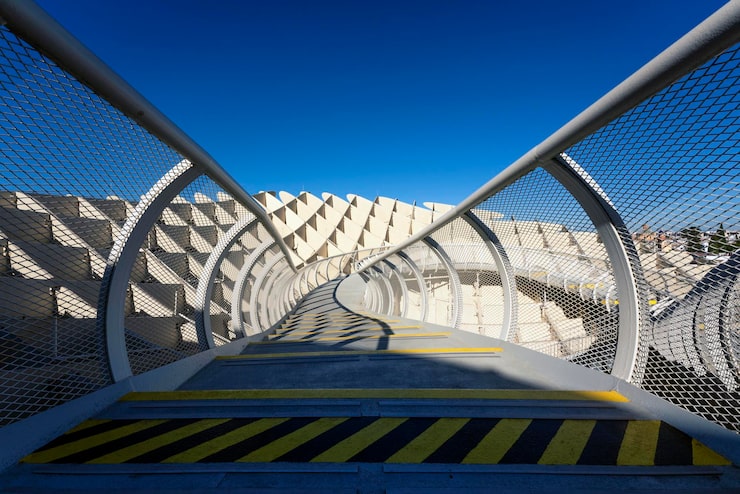
Infrastructure in the Great Plains faces a set of environmental challenges unlike anywhere else in the country. In South Dakota, our roads are the lifelines of our economy, connecting agricultural hubs in Sioux Falls to the tourism gateways of the Black Hills. However, these vital arteries are under constant assault from extreme weather and heavy industrial loads.
At The Graphene Solution, we provide a revolutionary approach to civil engineering: Graphene Concrete for Roadways Construction in South Dakota. By infusing traditional concrete with graphene—a carbon-based nanomaterial—we create a roadway surface that is not only stronger but smarter and more resilient to the South Dakota climate.
Standard concrete pavement is struggling to keep pace with the modern demands of the Great Plains. When we look at the state of roadways from Rapid City to Aberdeen, several recurring issues emerge that drain municipal budgets and frustrate taxpayers.
South Dakota experiences some of the most drastic temperature swings in the United States. Moisture seeps into the microscopic pores of standard concrete; when it freezes, it expands, causing the surface to “spall” or flake away. Over a few seasons, these micro-cracks turn into deep potholes that compromise vehicle safety.
Our roads aren’t just for passenger cars. They carry heavy grain trucks, livestock trailers, and industrial equipment. This constant “cyclic loading” causes structural fatigue. Traditional concrete often lacks the flexural strength to handle these heavy weights without eventually bowing or cracking.
To keep I-29 and I-90 clear during our legendary winters, massive amounts of salt and chemical de-icers are used. These chemicals accelerate the corrosion of the steel reinforcement (rebar) inside the concrete. Once the internal skeleton of the road begins to rust, the entire structure is on borrowed time.
Because standard concrete wears down so quickly in our environment, road crews are constantly patching and resurfacing. This leads to persistent “orange barrel season,” causing significant delays for commerce and travel, while eating up a massive portion of the state and local infrastructure budgets.
Think about your standard concrete roadway like a dense sponge. To the naked eye, it looks solid. But at a microscopic level, it is full of tiny pores. In South Dakota, those pores are the enemy. During a rainy spring in the Black Hills, they soak up water. In a sudden October cold snap, that water freezes and expands, acting like a slow-motion jackhammer from the inside out.
When you ignore the permeability and the flexural weakness of traditional materials, you are essentially building an expiration date into every mile of highway. I have talked to municipal planners in Brookings and Watertown who are seeing structural degradation in bridge decks and overpasses that were supposed to last another twenty years.
We do not just ship you a bag of powder and wish you luck on your next SDDOT project. Our process is collaborative and deeply technical. We work with your engineers and local South Dakota ready-mix partners to ensure the graphene is integrated perfectly for the specific climate and load requirements of your site. Whether you are working on the heavy freight corridors of I-29 or graphene concrete in bridge construction over the Big Sioux River, we handle the molecular heavy lifting.
Graphene is often called a “wonder material” because it is 200 times stronger than steel and incredibly lightweight. When we apply behind graphene technology in concrete, we solve the problems listed above at a molecular level.
Graphene acts as a “pore-filler.” It makes the concrete much denser and nearly impermeable to water. If the water cannot get into the concrete, it cannot freeze and expand. Our Graphene Concrete for Roadways Construction in South Dakota creates a shield that protects the road from the inside out.
By integrating graphene, we increase the concrete’s ability to withstand heavy loads. It isn’t just “harder”; it is more flexible in the face of pressure. This means our roads can support the heaviest agricultural shipments across the plains without the risk of structural cracking. You can learn more about how graphene improves durability and lifespan to see the long-term data.
Because the concrete is more dense, de-icing salts cannot reach the internal rebar. Graphene creates a barrier that prevents the chemical reactions that lead to rust and corrosion. This effectively doubles or even triples the lifespan of bridge decks and highway overpasses.
Building with graphene is a hallmark of graphene in sustainable construction 2025. Because the material is so much stronger, we can often use thinner slabs to achieve the same structural goals, reducing the total amount of cement needed. This lowers the carbon footprint and provides a significant return on investment through reduced maintenance.
Smart Applications of Graphene Concrete
At The Graphene Solution, we believe that innovation begins with material science. Our graphene-infused concrete is leading the way in sustainable, high-performance infrastructure across various sectors. This powerful technology doesn’t just strengthen construction — it redefines what’s possible in terms of longevity, safety, and efficiency. Below, discover the ten most impactful uses of graphene concrete across industries that demand excellence.
Graphene-enhanced concrete provides the superior compressive strength needed for tall, modern skyscrapers. Its lightweight properties and structural stability reduce the load on foundations while enhancing safety in seismic zones.
In critical infrastructure like bridges, graphene adds durability and crack resistance. It ensures longer lifespans with reduced maintenance, even under heavy loads and extreme weather conditions.
Graphene concrete helps roads last longer by resisting cracking and surface wear. It's ideal for busy highways where traffic and climate changes typically cause rapid deterioration.
From piers to seawalls, graphene protects concrete from saltwater corrosion. It significantly improves the longevity of marine structures by resisting moisture and harsh coastal conditions.
Graphene-infused concrete ensures leak-proof construction in water retention systems. Its impermeability and high strength make it perfect for dams, spillways, and reservoirs.
Safety is non-negotiable in nuclear and energy projects. Graphene-enhanced concrete offers unmatched fire resistance and structural integrity, critical for power stations and reactor containment.
Underground environments demand resilient materials. Graphene concrete excels in tunnel construction, offering faster curing times, high load resistance, and long-term durability.
For everyday construction, graphene offers eco-friendly, cost-effective solutions. It’s ideal for foundations, walls, and slabs in both commercial and residential settings, reducing material waste and emissions.
Warehouses, factories, and heavy-duty plants benefit from graphene’s load-bearing strength and resistance to chemicals. It ensures longer-lasting floors and structural components in demanding industrial zones.
From runways to terminals, graphene concrete supports aviation’s demanding needs. Its toughness under high traffic and weather fluctuations makes it a go-to for modern airport development.
I understand the skepticism. In the construction world, we have all been promised “miracle cures” before. But graphene is not a chemical trick; it is physical reinforcement on the smallest scale imaginable. When you look at the benefits of graphene-enhanced concrete, the numbers speak for themselves.
| Performance Metric | Standard SD Highway Mix | Graphene-Enhanced Concrete |
| Compressive Strength | Baseline (Standard) | 30% to 50% Higher |
| Water Permeability | Moderate (Sponge effect) | Extremely Low (Shielded) |
| Salt/Chloride Resistance | Low (Corrodes rebar) | Superior Molecular Shield |
| Tensile Flexural Strength | Brittle (Prone to snapping) | Significantly Enhanced |
| Maintenance Interval | 5-7 Years (Average repair) | 25+ Year Integrity |
By choosing to strengthen concrete at a molecular level, you are building for the next generation. We have seen before-and-after scenarios where bridge decks that used to require annual patching now look as fresh as the day the forms were pulled, even after a heavy winter of salting and plowing.
Building roads in South Dakota is a high-stakes job. You can continue to use the same materials that have been failing our infrastructure for decades, or you can decide that your next project will be the one that defines a new standard. Don’t let your hard work be slowly eaten away by the salt, the humidity, and the pounding of heavy freight.
At The Graphene Solution, we are ready to be your partners in this transition. We have the data, the expertise, and the passion to make sure your next pour is the strongest one you’ve ever done. Build something that will still be standing tall for the next generation of South Dakotans.
Reach out to us today. Let’s talk about your project, your soil challenges, and how we can get graphene into your next mix. You’ve already done the hard work of landing the contract; let us help you deliver a result that finally lets you sleep through the night.


UPDATES AND NEWSStay informed with expert insights, industry news, and project breakthroughs from The Graphene Solution. Our blog covers everything from graphene applications in construction to sustainable building trends and performance tips—designed to help you build smarter.