You know that sound.
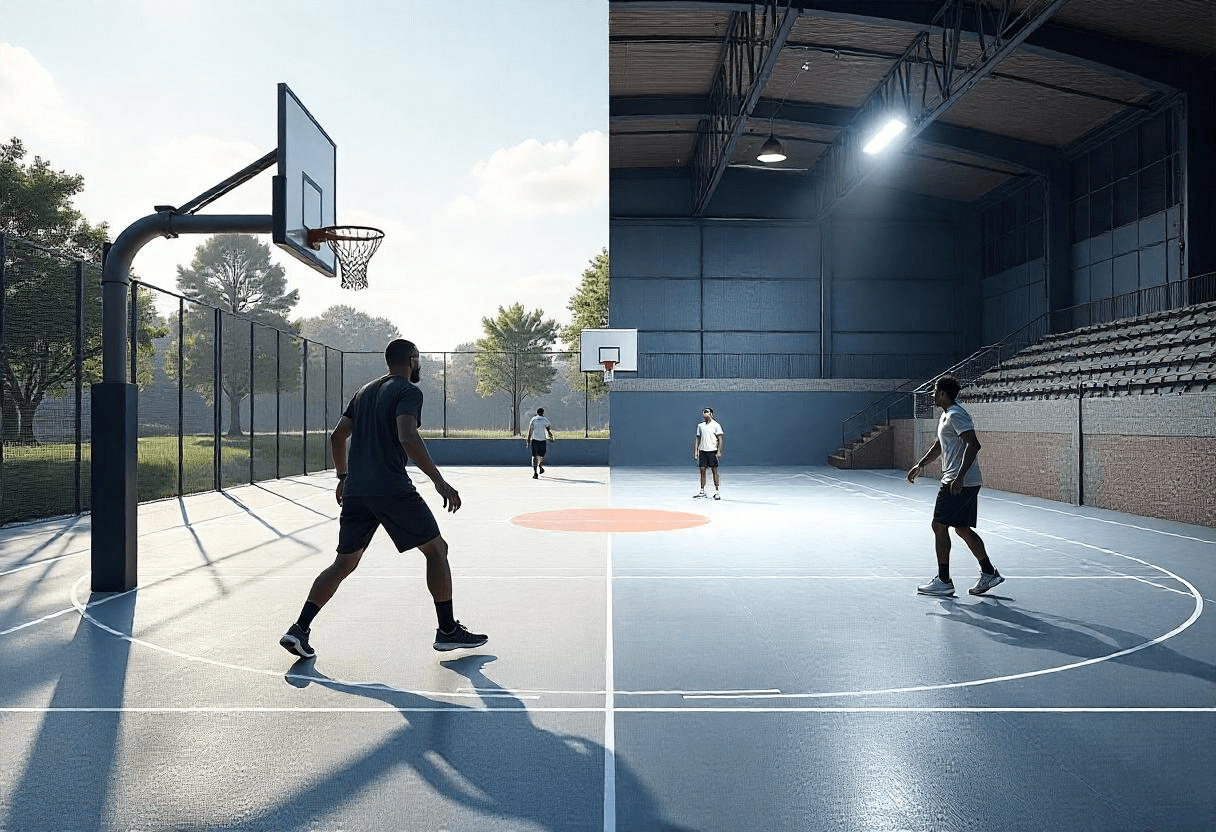
It’s the dull “thud” of a basketball hitting a dead spot on the concrete. Or that heart-stopping moment when you’re running for a volley on the tennis court, and your toe catches a raised crack on the baseline.
It’s frustrating for the players, sure. But if you are the one responsible for maintaining that court—whether it’s in your backyard, at a school, or managing a municipal park—it’s a different kind of headache. It’s the realization that the money you spent resurfacing the court three years ago is literally crumbling away.
Standard concrete is great, but it has a fatal flaw: it’s brittle.
Once it cures, it doesn’t like to move. But the ground underneath it? That moves all the time. Soil settles, roots push up, and moisture gets in. Eventually, the concrete gives up and cracks. And once that first crack appears, it’s game over. Water seeps in, freezes, expands, and turns a hairline fracture into a tripping hazard.
For years, the only solution was to patch it (which looks terrible) or rip it out and start over (which costs a fortune).
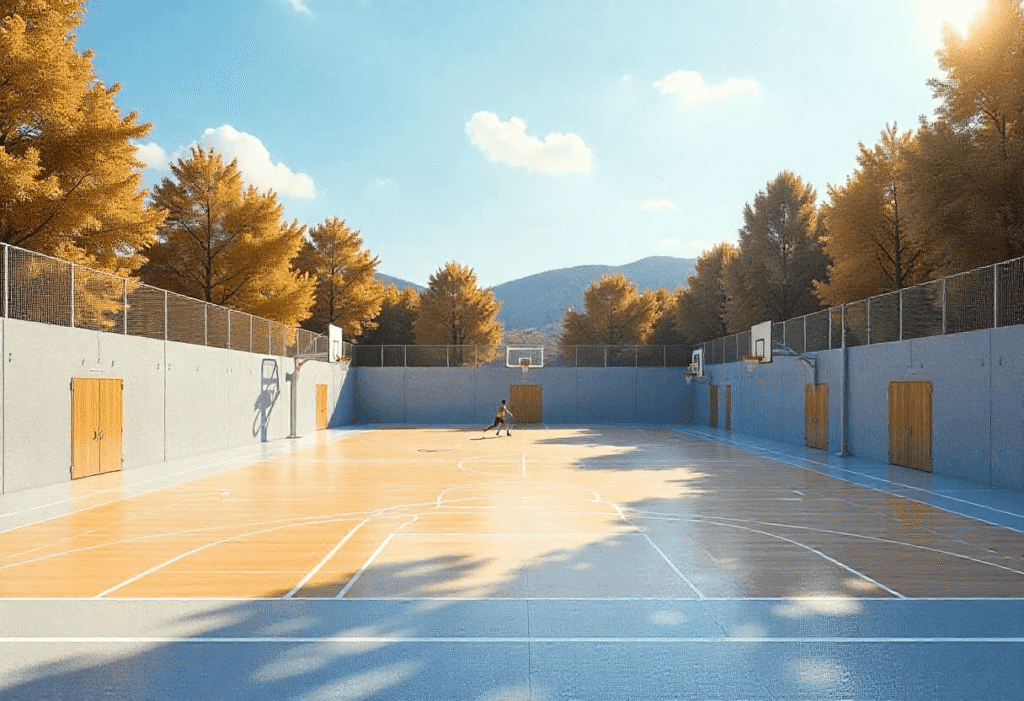
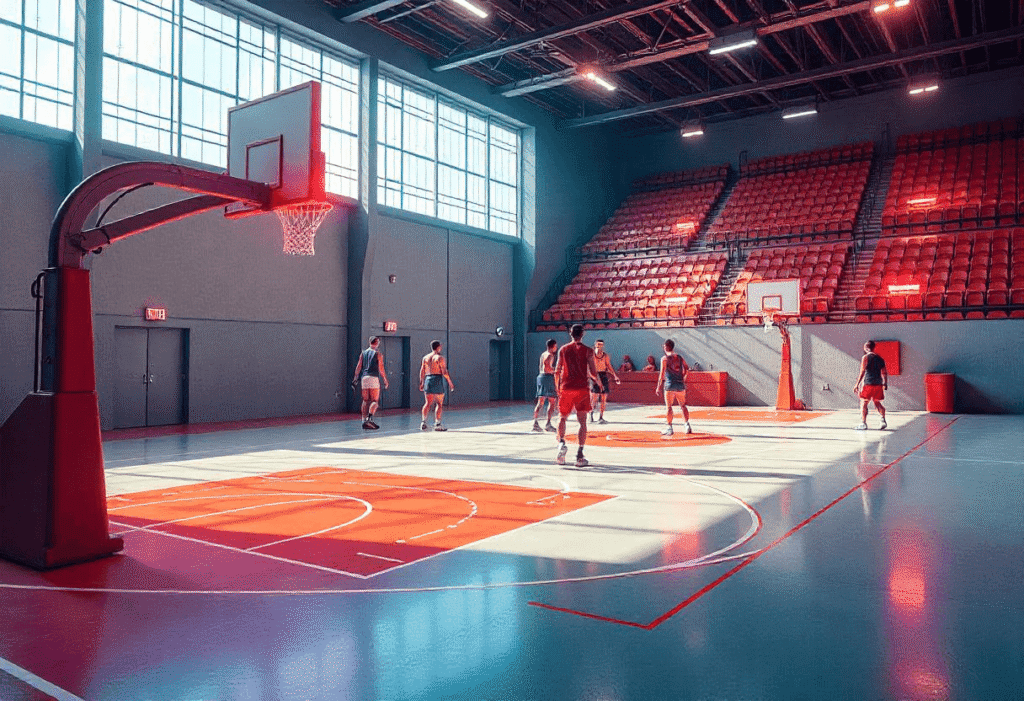
But we aren’t stuck with 20th-century technology anymore. There is a way to build a court that stays smooth, safe, and playable for decades, not just seasons.

The future of basketball flooring is here—and it’s built with graphene.
Ignoring the condition of a sports court isn’t just about aesthetics. It’s a liability issue.
I’ve seen community centers shut down entire banks of courts because the surface became too dangerous to play on. I’ve talked to homeowners who stopped using their expensive backyard setup because the surface was so uneven it ruined the game.
When you settle for standard materials, you are essentially signing up for a subscription service of repairs. You pay to pour it, you pay to seal it, you pay to crack-fill it, and then you pay to replace it.
It’s a cycle that drains budgets.
We need to change the chemistry of the court itself. We need a material that is dense enough to repel water but has enough tensile strength to handle the shifting ground without snapping.
This is where graphene changes the game.
So, what is graphene sports courts construction? It’s not a magic wand, but it is some serious science.
Graphene is a nanomaterial. It’s a single layer of carbon atoms arranged in a honeycomb lattice. When we introduce it into the concrete mix or the surfacing layers, it acts as a super-reinforcement agent.
If you’re curious about the mechanics, you can read more about how graphene strengthens concrete at a molecular level, but here is the simple version: it locks the cement together more tightly than anything else on the market.
Here is what our process looks like:
Site Evaluation: We look at what killed the last court. Was it drainage? Tree roots? Poor soil compaction? We have to fix the foundation before we pour the finish.
The Mix Design: We don’t just order a standard truck. We formulate a mix with a specific dosage of graphene. This ensures the material has higher flexural strength (it can bend slightly without breaking).
The Pour and Finish: Graphene concrete finishes beautifully. It’s incredibly dense, which gives you that consistent ball bounce every player wants.
Surfacing: If we are applying an acrylic color coating, the graphene base ensures that moisture doesn’t wick up from the ground and bubble the paint—a huge problem with standard slabs.
Houston, Tx 77066


When you invest in a graphene-enhanced court, you aren’t just buying concrete. You are buying longevity.
We are seeing courts that withstand freeze-thaw cycles that would shatter standard pavement. Because the material is so dense, it’s practically waterproof. This means the rebar inside stays protected from rust, and the surface stays smooth.
Here is why facility managers and homeowners are making the switch:
Consistent Playability: No more dead spots or weird bounces caused by internal voids in the concrete.
Lower Maintenance Costs: You stop spending your budget on crack filling every spring.
Impact Resistance: Graphene improves the surface’s ability to take a beating—whether from pickleball paddles or basketballs.
Sustainability: Because the material lasts longer, you reduce the carbon footprint of the project over its lifecycle. It’s one of the best eco-friendly alternatives to traditional concrete available.
Look, nobody wants to be the person putting up the “Court Closed for Repairs” sign.
Whether you are building a dream court in your backyard or managing a complex for a city, you deserve a surface that respects the game. You want to build it once, build it right, and then just play on it.
We can help you do that.
Check out our recent projects to see what we’ve been building, and then let’s talk about your site. We’ll give you an honest assessment of what you need—no fluff, just solid engineering.
Smart Applications of Graphene Concrete
At The Graphene Solution, we believe that innovation begins with material science. Our graphene-infused concrete is leading the way in sustainable, high-performance infrastructure across various sectors. This powerful technology doesn’t just strengthen construction — it redefines what’s possible in terms of longevity, safety, and efficiency. Below, discover the ten most impactful uses of graphene concrete across industries that demand excellence.
Graphene-enhanced concrete provides the superior compressive strength needed for tall, modern skyscrapers. Its lightweight properties and structural stability reduce the load on foundations while enhancing safety in seismic zones.
In critical infrastructure like bridges, graphene adds durability and crack resistance. It ensures longer lifespans with reduced maintenance, even under heavy loads and extreme weather conditions.
Graphene concrete helps roads last longer by resisting cracking and surface wear. It's ideal for busy highways where traffic and climate changes typically cause rapid deterioration.
From piers to seawalls, graphene protects concrete from saltwater corrosion. It significantly improves the longevity of marine structures by resisting moisture and harsh coastal conditions.
Graphene-infused concrete ensures leak-proof construction in water retention systems. Its impermeability and high strength make it perfect for dams, spillways, and reservoirs.
Safety is non-negotiable in nuclear and energy projects. Graphene-enhanced concrete offers unmatched fire resistance and structural integrity, critical for power stations and reactor containment.
Underground environments demand resilient materials. Graphene concrete excels in tunnel construction, offering faster curing times, high load resistance, and long-term durability.
For everyday construction, graphene offers eco-friendly, cost-effective solutions. It’s ideal for foundations, walls, and slabs in both commercial and residential settings, reducing material waste and emissions.
Warehouses, factories, and heavy-duty plants benefit from graphene’s load-bearing strength and resistance to chemicals. It ensures longer-lasting floors and structural components in demanding industrial zones.
From runways to terminals, graphene concrete supports aviation’s demanding needs. Its toughness under high traffic and weather fluctuations makes it a go-to for modern airport development.


UPDATES AND NEWSStay informed with expert insights, industry news, and project breakthroughs from The Graphene Solution. Our blog covers everything from graphene applications in construction to sustainable building trends and performance tips—designed to help you build smarter.
graphene athletics