Innovative Graphene Solutions for High-Rise Buildings Construction

  • Home
  • High-Rise Buildings
Graphene Concrete for High-Rise Construction | The Graphene Solution

🏙️ Graphene Concrete for High-Rise Building Construction

There is a specific kind of tension you feel when you’re standing on the deck of a high-rise project, looking at the rebar cage for a shear wall or a mega-column.

You’re fighting physics, and physics doesn’t like to lose.

Every foot you go up adds weight. That weight demands more support at the bottom. So, you thicken the core walls. You widen the columns. You add more steel. But then that adds weight, which requires even more massive foundations.

It’s a vicious cycle.

And honestly? It eats into the one thing developers care about most: Rentable Square Footage (RSF).

I’ve sat in enough design meetings to know the frustration. The architect wants soaring, open spaces. The structural engineer points to the loads and says, “No, that column needs to be four feet wide.” The developer looks at the lost floor space and calculates the lost revenue over a 30-year lease.

For decades, the only answer was “higher strength concrete.” We moved from 4,000 psi to 8,000 psi, and now we see 12,000+ psi mixes. But we’re hitting a wall with traditional Ordinary Portland Cement (OPC). It gets brittle. It gets hard to pump 50 stories up. And the carbon footprint? It’s astronomical.

But what if you could break that cycle?

What if you could make the concrete stronger without making the structural elements bigger? In fact, what if you could make them smaller?

That’s where graphene comes in.

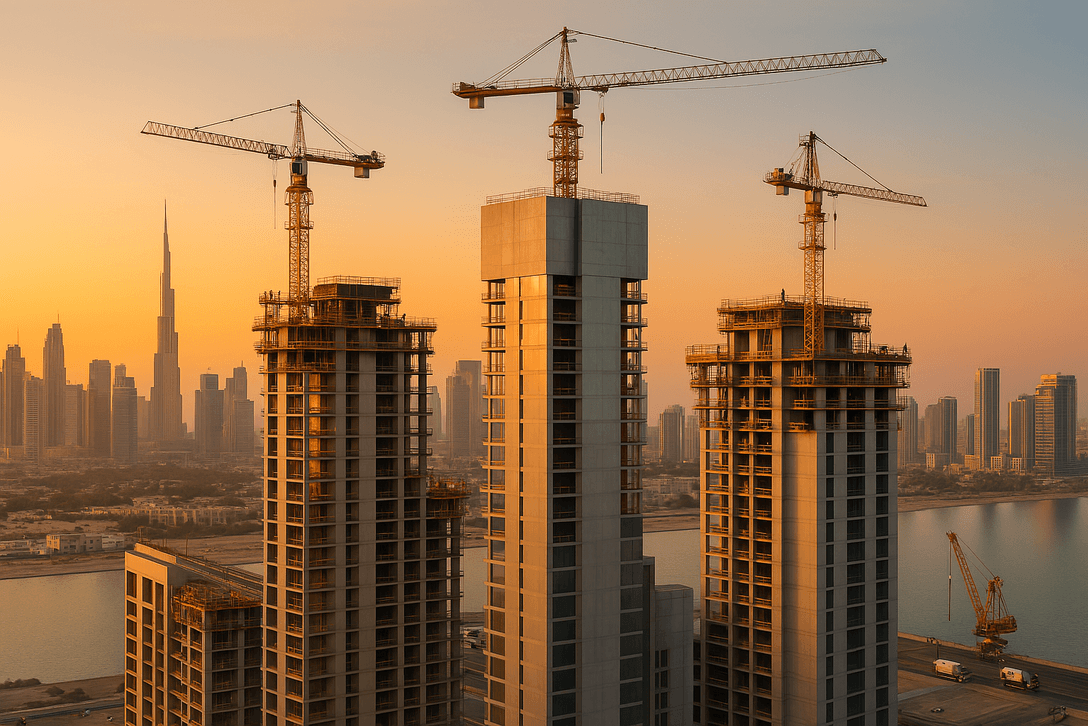
Construction cranes atop modern residential towers at sunset in Houston, TX, showcasing advanced building techniques and materials, relevant to the Skytower Residential Build project utilizing graphene-enhanced concrete.

Why "Heavy" is No Longer the Only Way to Build "Strong"

The problem with traditional high-rise construction isn’t just gravity; it’s the limitations of the material itself.

Standard concrete is porous. It has microscopic voids that weaken the matrix. To get the compressive strength needed for a skyscraper, we pack it full of cement and heavy aggregates.

But this creates a few massive headaches for the project team:

  1. The Space Penalty: To carry the load, columns on lower floors have to be massive. This creates “dead zones” in the floor plan that can’t be leased or sold.

  2. The Carbon Tax: Investors and municipalities are cracking down on embodied carbon. High-strength concrete is notoriously carbon-intensive.

  3. The Pumping Nightmare: Getting a super-viscous, high-strength mix to the 60th floor requires massive pressure, which wears out pumps and risks blockages.

If we ignore these issues, we end up with buildings that are technically safe but financially efficient and environmentally obsolete before they even open.

We need to change the strength-to-weight ratio of the building blocks.

Construction site featuring two high-rise buildings under development, equipped with cranes and scaffolding, emphasizing innovative graphene concrete for enhanced strength and durability.
High-rise construction site at sunset featuring two cranes lifting materials for graphene-enhanced concrete buildings, emphasizing urban development and innovative engineering.

🏗️ Benefits of Graphene Concrete in High-Rise Construction

In tall buildings, performance and durability are non-negotiable. Here’s why architects and builders choose graphene-enhanced concrete when height meets complexity:
  • Increased load-bearing capacity with higher strength-to-weight ratio
  • Reduces deformation and cracking from wind sway or vibrations
  • Better performance under thermal expansion and contraction
  • Lower curing time means faster project timelines and reduced labor costs
  • Improved energy efficiency with better thermal conductivity control
  • Reduced environmental impact through lower cement usage
Whether you’re building the next skyline-defining tower or reinforcing a growing city’s core, graphene concrete is the future-forward solution for ambitious vertical projects.

❓ Frequently Asked Questions About Graphene in High-Rise Construction

Here are answers to some of the most common questions we get from engineers, contractors, and developers exploring graphene solutions for tall buildings.

Actually, it can improve it. Graphene has high thermal conductivity and stability. In high-strength concrete, "explosive spalling" during a fire is a real risk (moisture turns to steam and blows the concrete apart). Graphene makes the matrix denser but also tougher, helping to maintain structural integrity under thermal stress.

Yes. One of the hidden benefits of graphene is that it improves the thixotropy of the mix. That’s a fancy way of saying it flows when pushed but stays put when it stops. It helps lubricate the pump lines, reducing wear on the equipment and the risk of blockage.

Absolutely. The high early strength gain of graphene mixes is perfect for PT decks. It allows you to stress the cables sooner, which speeds up the entire construction schedule.

The concrete material cost is higher. However, the project cost often drops. When you factor in the additional rentable space, the reduced steel requirement, and the faster schedule, the ROI is usually positive.
Graphene Solution logo featuring a molecular structure symbolizing innovative graphene-enhanced concrete technology.Smart Applications of Graphene Concrete

Breakthrough Uses of Graphene in Modern Construction

At The Graphene Solution, we believe that innovation begins with material science. Our graphene-infused concrete is leading the way in sustainable, high-performance infrastructure across various sectors. This powerful technology doesn’t just strengthen construction — it redefines what’s possible in terms of longevity, safety, and efficiency. Below, discover the ten most impactful uses of graphene concrete across industries that demand excellence.

High-Rise Buildings

Graphene-enhanced concrete provides the superior compressive strength needed for tall, modern skyscrapers. Its lightweight properties and structural stability reduce the load on foundations while enhancing safety in seismic zones.

Bridges and Overpasses

In critical infrastructure like bridges, graphene adds durability and crack resistance. It ensures longer lifespans with reduced maintenance, even under heavy loads and extreme weather conditions.

Roadways and Highways

Graphene concrete helps roads last longer by resisting cracking and surface wear. It's ideal for busy highways where traffic and climate changes typically cause rapid deterioration.

Marine Structures

From piers to seawalls, graphene protects concrete from saltwater corrosion. It significantly improves the longevity of marine structures by resisting moisture and harsh coastal conditions.

Dams and Reservoirs

Graphene-infused concrete ensures leak-proof construction in water retention systems. Its impermeability and high strength make it perfect for dams, spillways, and reservoirs.

Nuclear and Energy Infrastructure

Safety is non-negotiable in nuclear and energy projects. Graphene-enhanced concrete offers unmatched fire resistance and structural integrity, critical for power stations and reactor containment.

Tunnel Construction

Underground environments demand resilient materials. Graphene concrete excels in tunnel construction, offering faster curing times, high load resistance, and long-term durability.

Residential and Commercial Buildings

For everyday construction, graphene offers eco-friendly, cost-effective solutions. It’s ideal for foundations, walls, and slabs in both commercial and residential settings, reducing material waste and emissions.

Industrial Facilities

Warehouses, factories, and heavy-duty plants benefit from graphene’s load-bearing strength and resistance to chemicals. It ensures longer-lasting floors and structural components in demanding industrial zones.

Airport Infrastructure

From runways to terminals, graphene concrete supports aviation’s demanding needs. Its toughness under high traffic and weather fluctuations makes it a go-to for modern airport development.

Graphene concrete for dam construction, highlighting durability and watertight properties for modern infrastructure.
Graphene-enhanced concrete applications in dam construction showcasing durability and sustainability benefits.
Graphene Solution logo featuring a molecular structure symbolizing innovative graphene-enhanced concrete technology.UPDATES AND NEWS

Explore the Latest in Graphene Concrete Innovation

Stay informed with expert insights, industry news, and project breakthroughs from The Graphene Solution. Our blog covers everything from graphene applications in construction to sustainable building trends and performance tips—designed to help you build smarter.